
Today, MicroPython celebrates its 13th birthday - we've got some big discounts on a range of MicroPython and CircuitPython boards. Including our new Badgeware range of boards!

All of the MicroPython and CircuitPython deals are here!
Developed by Australian programmer Damien George, MicroPython is a version of Python 3 for microcontrollers. George's first line of private MicroPython code was written on April 29, 2013 and we're marking this momentous event with some deep discounts on your favourite MicroPython boards.
We've long supported MicroPython, it provides a quick and easy way for beginners to get started with microcontrollers, without having to wrestle with special tools or complicated tool-chains. Our developers contribute improvements and features to upstream MicroPython. We've even gone as far as to release our range of firmware to support our range of MicroPython-powered boards such as our latest product line, Badgeware. We're always pushing the envelope of what MicroPython can do, and Badgeware is just the latest.
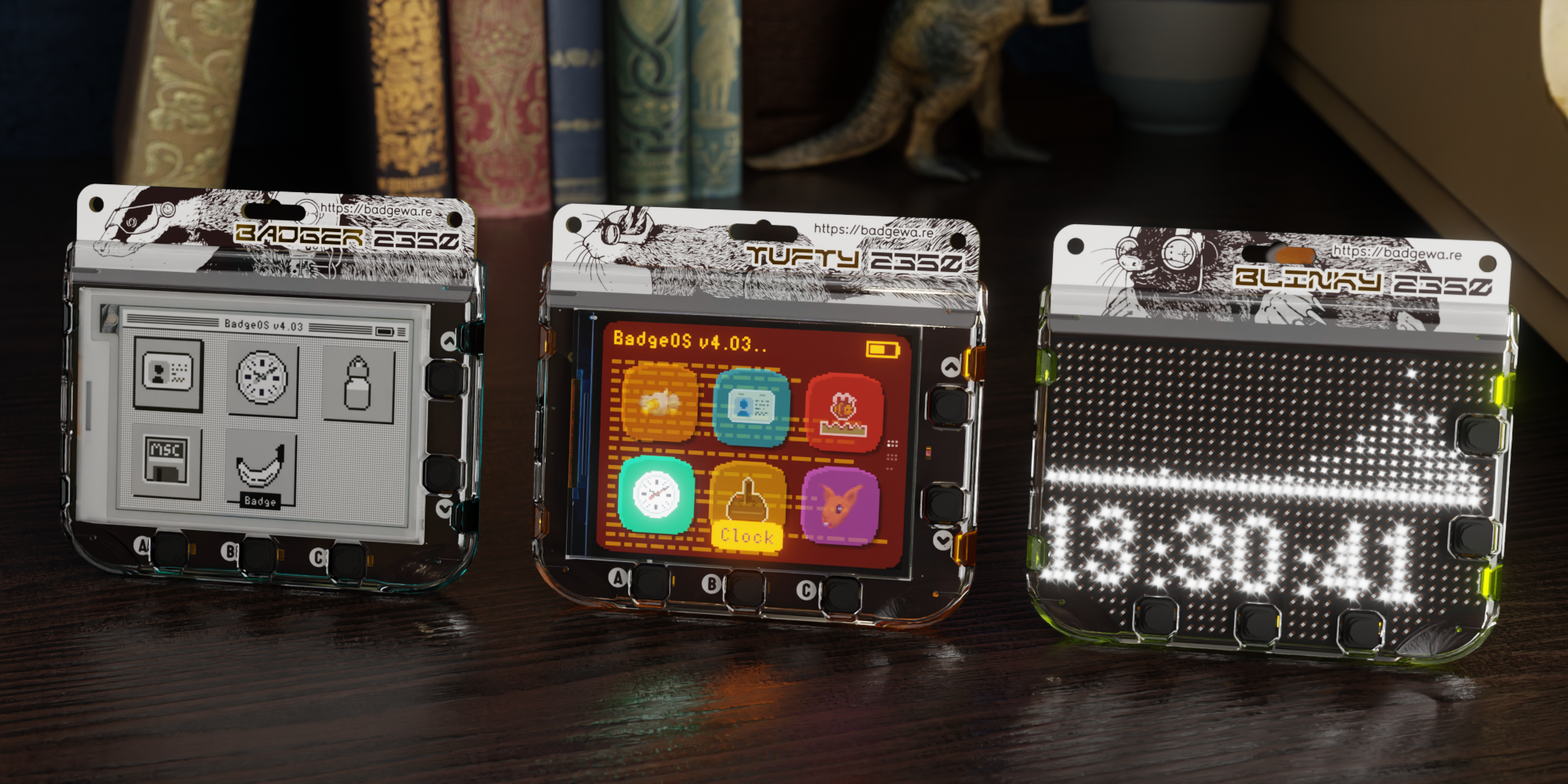
To celebrate MicroPython's milestone birthday, we are taking 20% off the entire Badgeware range.
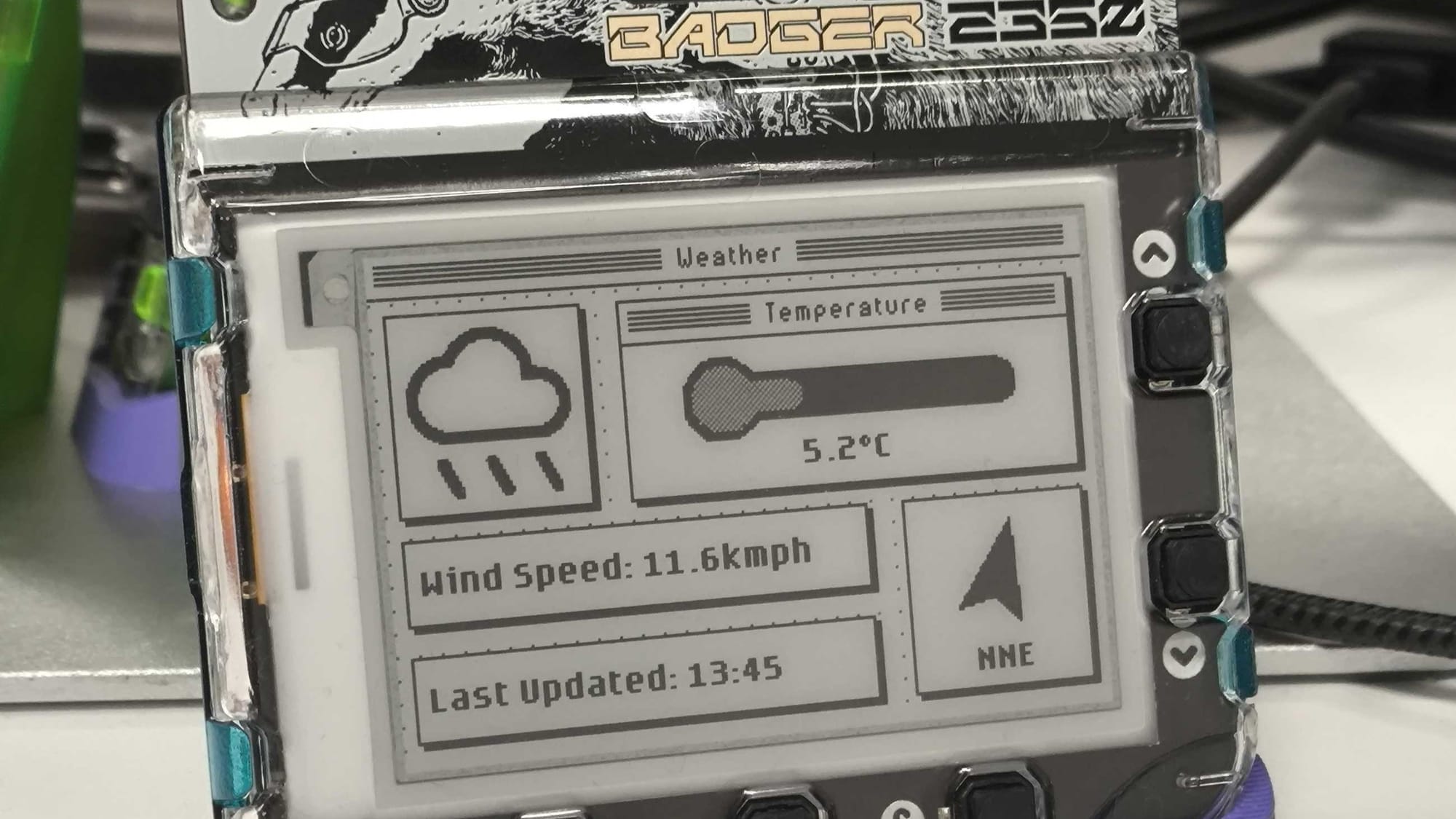
Create your own weather station with Badger 2350.
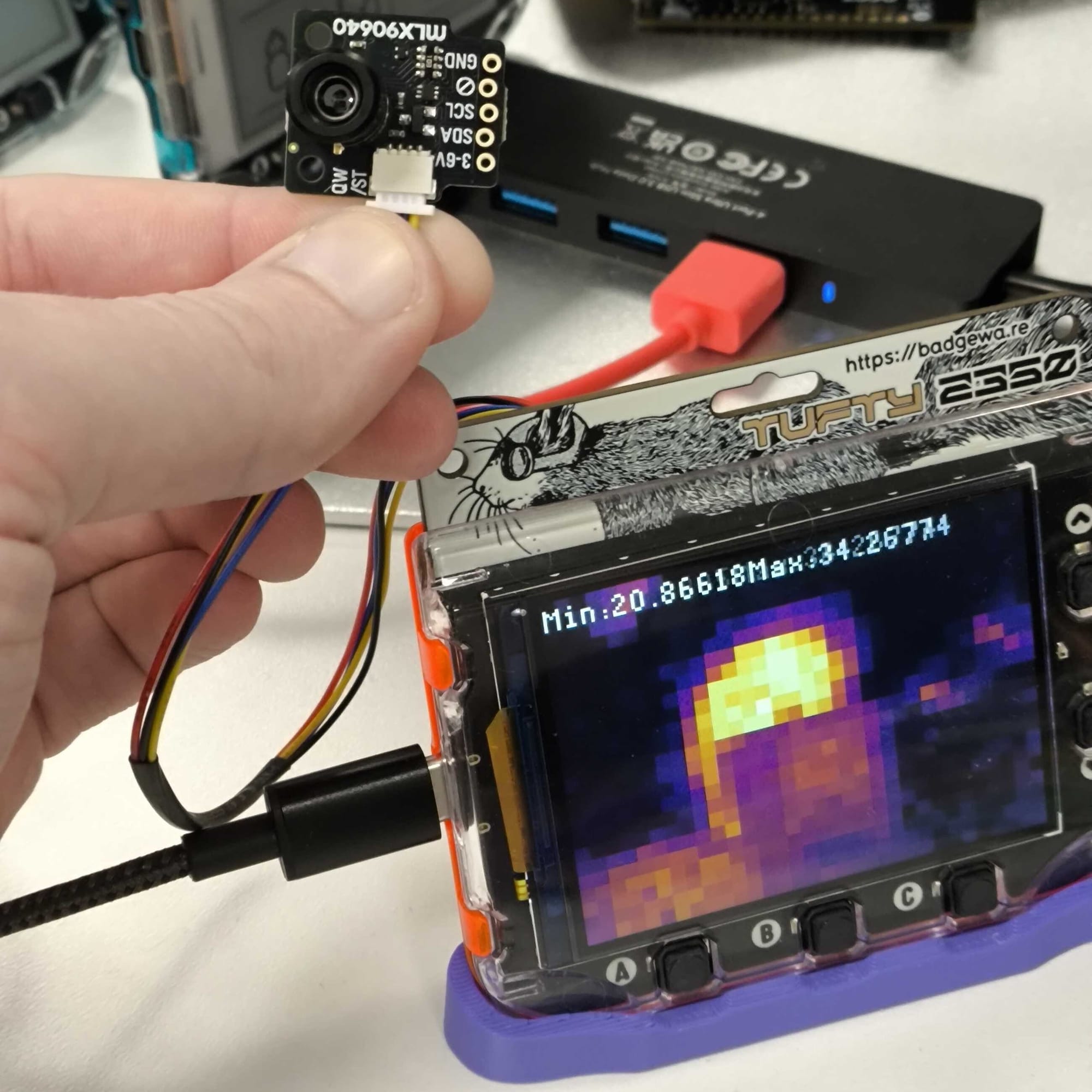
Grab a Tufty 2350 and an MLX90640 thermal camera breakout and build your own portable thermal imaging camera.
Previous to Badgeware we made Picovision, a powerful digital video stick with dual RP2040, one for the CPU, the other acting as a GPU. Code your own games on your very own games console, or just use it to display live data without the need for a full computer.
Presto - Your digital desktop companion
Need a digital desktop companion? Presto, our RP2350 powered kit can display your calendar updates, weather reports, photos, anything on its 4 inch square IPS display.
It is exciting to see how far MicroPython has come in 13 years. From a simple REPL (Read, Eval, Print, Loop) and GPIO, to glorious full-colour displays and silky-smooth animation via Tufty 2350.
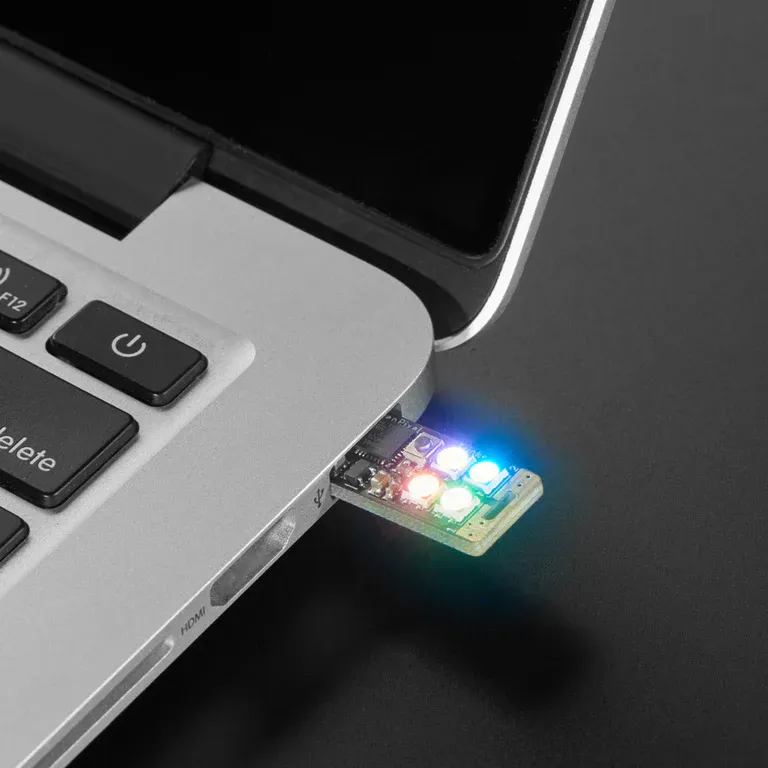
And, let's not forget the other boards that we stock that can run MicroPython. I've got a particular love for Adafruit's Trinkey boards, which are also discounted.
MicroPython enables fast prototyping for all levels of maker. From hobbyists to industrial applications, you can find Python running on microcontrollers and it all stems from 2013, when one person decided to port Python 3 to an STM32 based board and then raised the money to make it into a real product.
The first MicroPython board
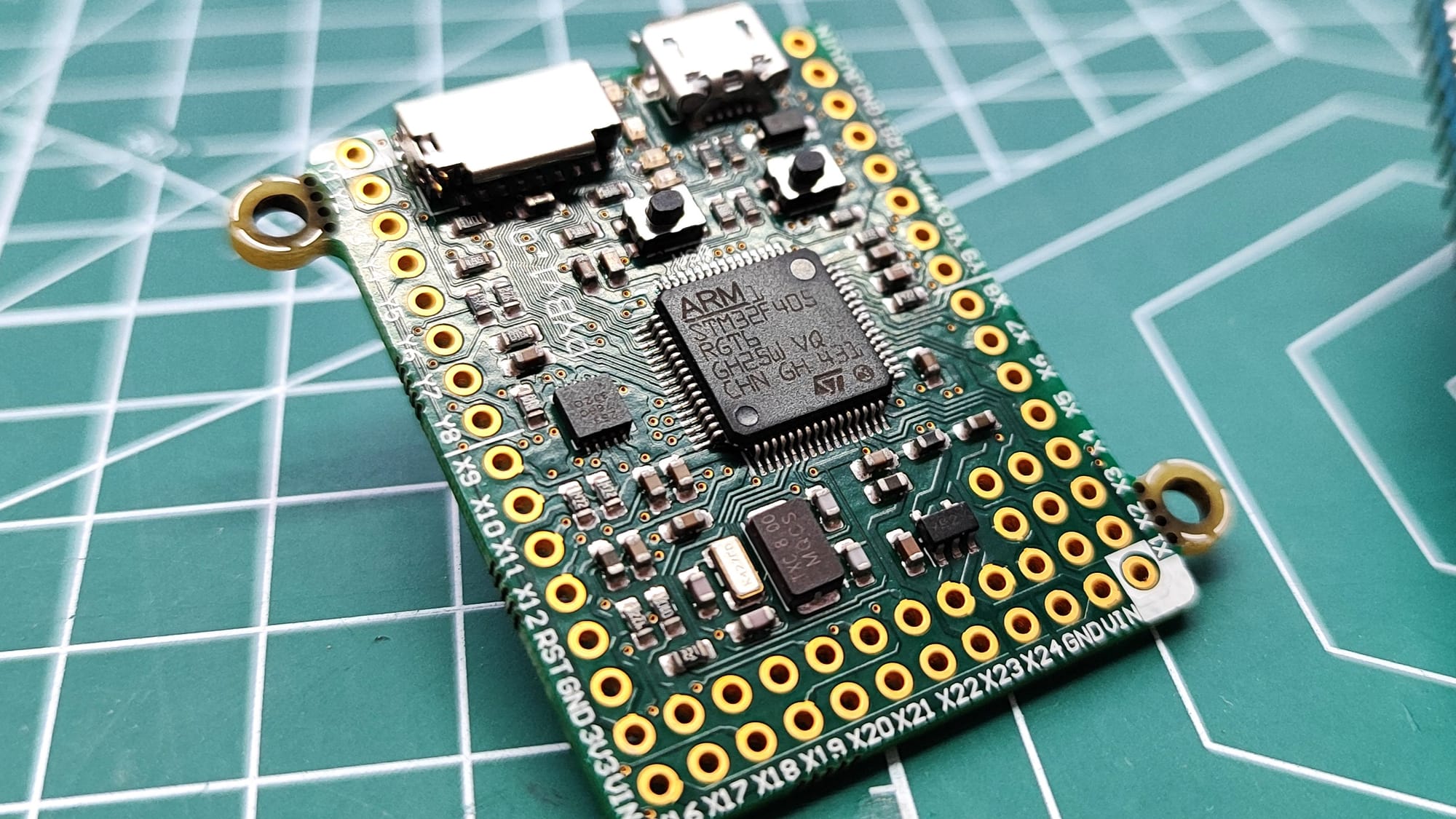
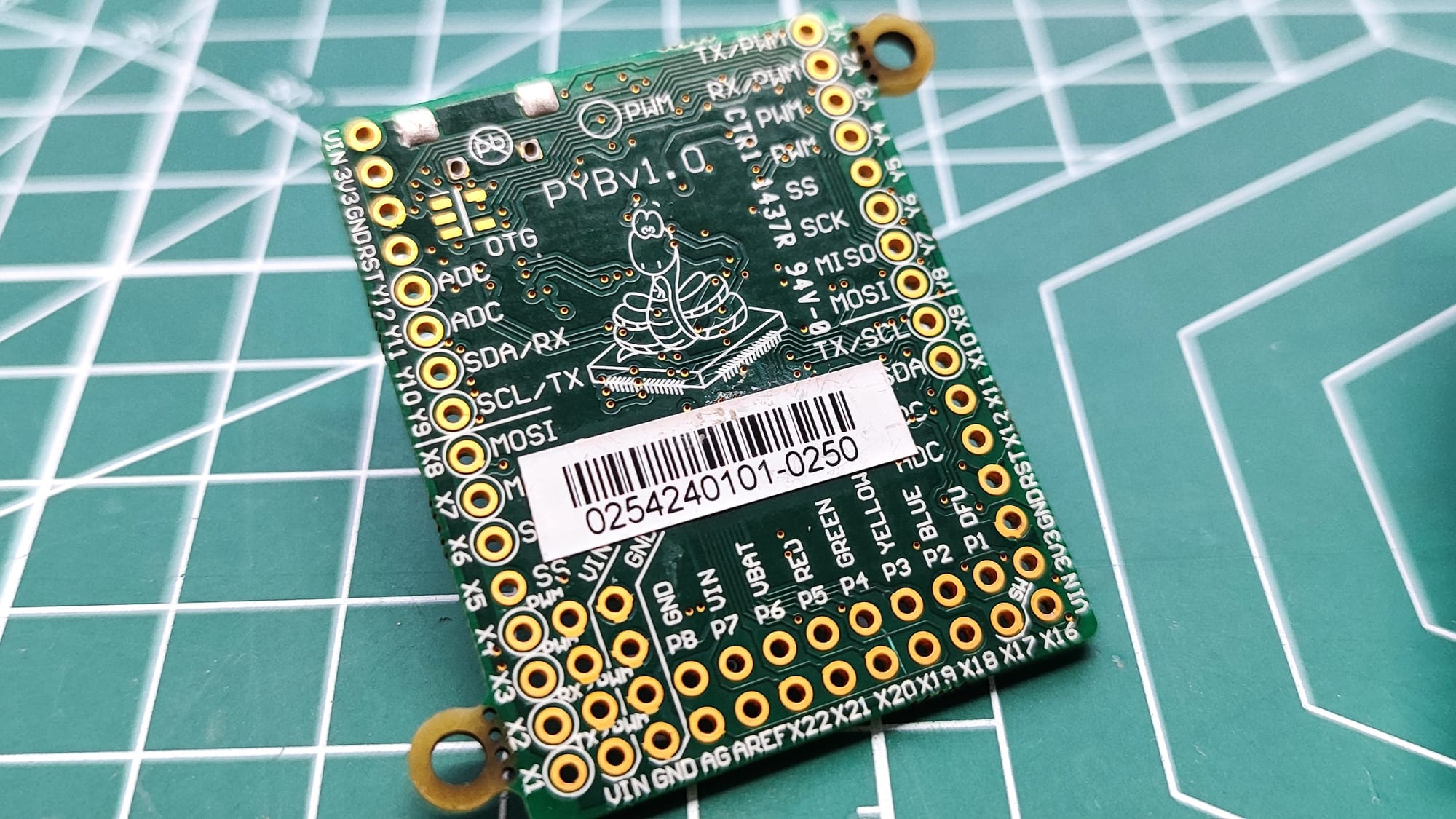
The original PyBoard from 2014, I have owned this board since then!
Way back in 2013, George started a crowdfunder to raise the capital necessary to make the first MicroPython board, PyBoard. I can remember testing and reviewing this board way back in 2014.
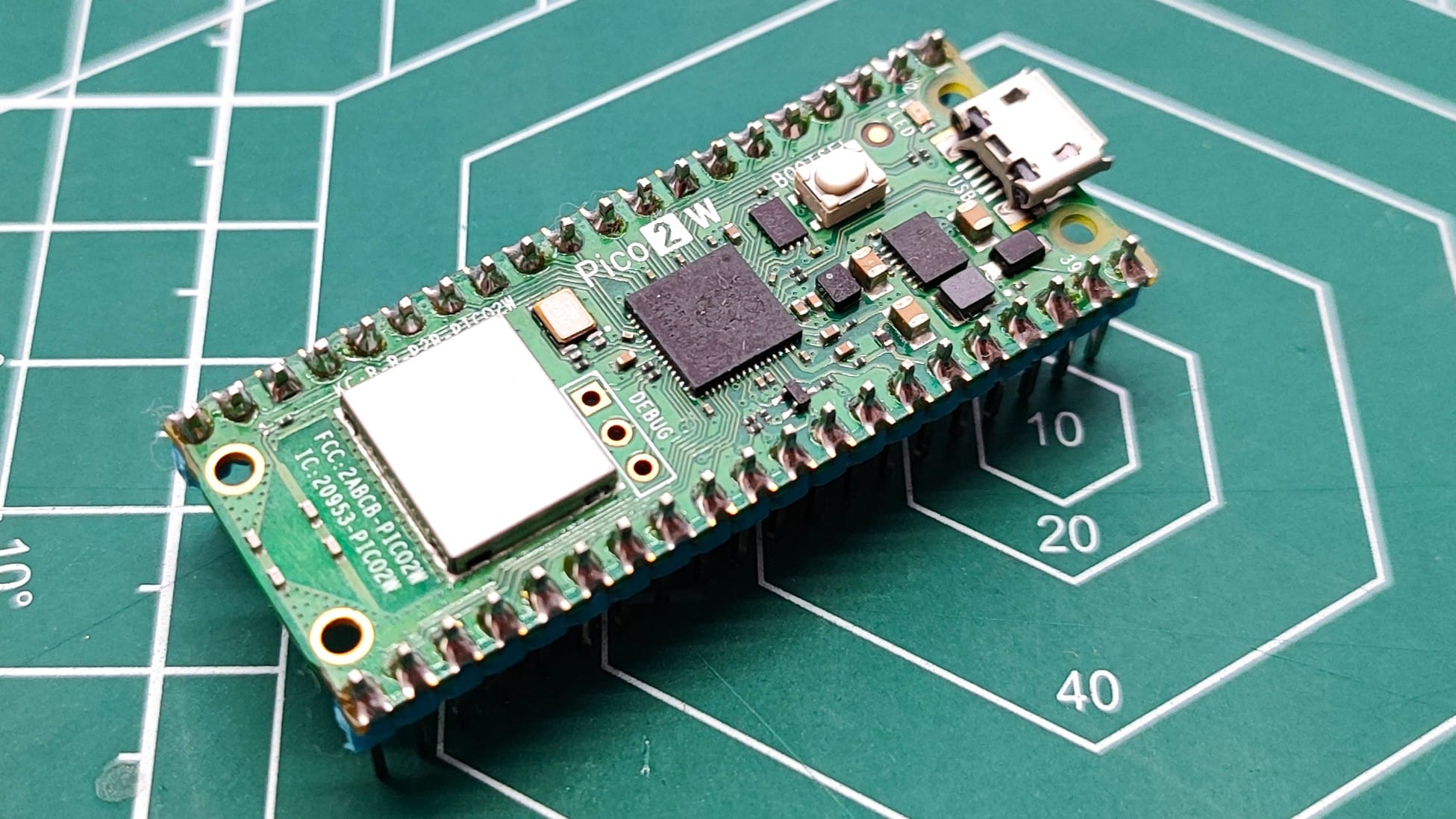
Compared to the Raspberry Pi Pico 2's RP2350, the PyBoard is a minnow, but we have to remember that there is a decade between them.
| Pyboard v1.0 | Raspberry Pi Pico 2 | |
|---|---|---|
| Year | 2014 | 2024 |
| MCU | STM32F405RG | RP2350 |
| CPU architecture | ARM Cortex-M4 | Dual-core ARM Cortex-M33 or RISC-V |
| RAM | 192 KB | 520 KB |
| Clock | 168 MHz | 150 MHz |
| Storage | 1 MB flash | 4MB QSPI Flash |
| ADC | 3x 12-bit analog to digital converters, available on 16 pins, 4 with analog ground shielding | Three 12-bit ADC |
| GPIO | 29 | 26 |
| Connectivity | I2C, UART, SPI, USB, CAN, SDIO | I2C, UART, SPI, I2S (via PIO), USB |
In the 13 years since the original board, there have been a plethora of Python-powered microcontrollers. Boards such as Espressif's ESP8266 and ESP32, the micro:bit project and of course Raspberry Pi's RP2040 and RP2350 have become successful platforms that makers have adopted into their projects.
MicroPython's 13-year success largely boils down to Python's popularity and the rise of the Internet of Things (IoT) and STEM (Science, Technology, Engineering, Mathematics). All of these aspects played a key factor in its wide-scale adoption. The same Python syntax taught in classrooms could also be used to create tiny Internet-enabled projects, make LEDs blink or control a robot.
The MicroPython firmware is constantly being improved and supported across a myriad of boards, including the Casio FX-9860GIII calculator. Yes, a calculator can run MicroPython!
Celebrate MicroPython entering its teenage years by grabbing a big discount on a plethora of MicroPython and CircuitPython powered products. View all of the deals here.